How long does a roof last in the UK?
It depends on the covering, and on what sits under it. Natural slate can run eighty years or more, clay tile sixty or more, concrete tile forty to sixty. The battens, the underlay and the mortar underneath give up long before the tiles do.
Lifespans by covering, in one table
Natural slate: 80 to 100 years, and often longer on a sheltered roof.
Clay plain tile: 60 years and up. A well laid clay roof can reach 100.
Concrete interlocking tile: 40 to 60 years.
Bitumen felt on a flat roof: 15 to 20 years for a built up job in three layers, less for a single layer.
GRP fibreglass on a flat roof: 20 to 30 years.
Bitumen underlay under the tiles: 30 to 40 years.
Softwood battens: as long as they stay dry, and no longer than that.
Sand and cement bedding at the ridge and the verge: 10 to 15 years.
Those are typical UK figures for a roof that was laid properly and looked at now and then. A roof fails at its weakest part, and that is rarely the tile.
How long should roof tiles last?
A concrete interlocking tile is good for 40 to 60 years. It goes patchy and dark long before it goes soft, so colour is not a guide to strength.
A clay tile lasts longer, often 60 to 100 years. Frost is what kills clay: water soaks into a porous tile, freezes and lifts the face off.
Slate is stone and does not really wear out. What fails is the nail holding it.
In almost every case the tile outlives the nail, the batten and the underlay it sits on.
What actually wears out first
Mortar at the ridge and the verge, at 10 to 15 years. It is rigid, and the roof moves.
Nails, on a slate roof. Once they rust through, slates slide off across the whole roof.
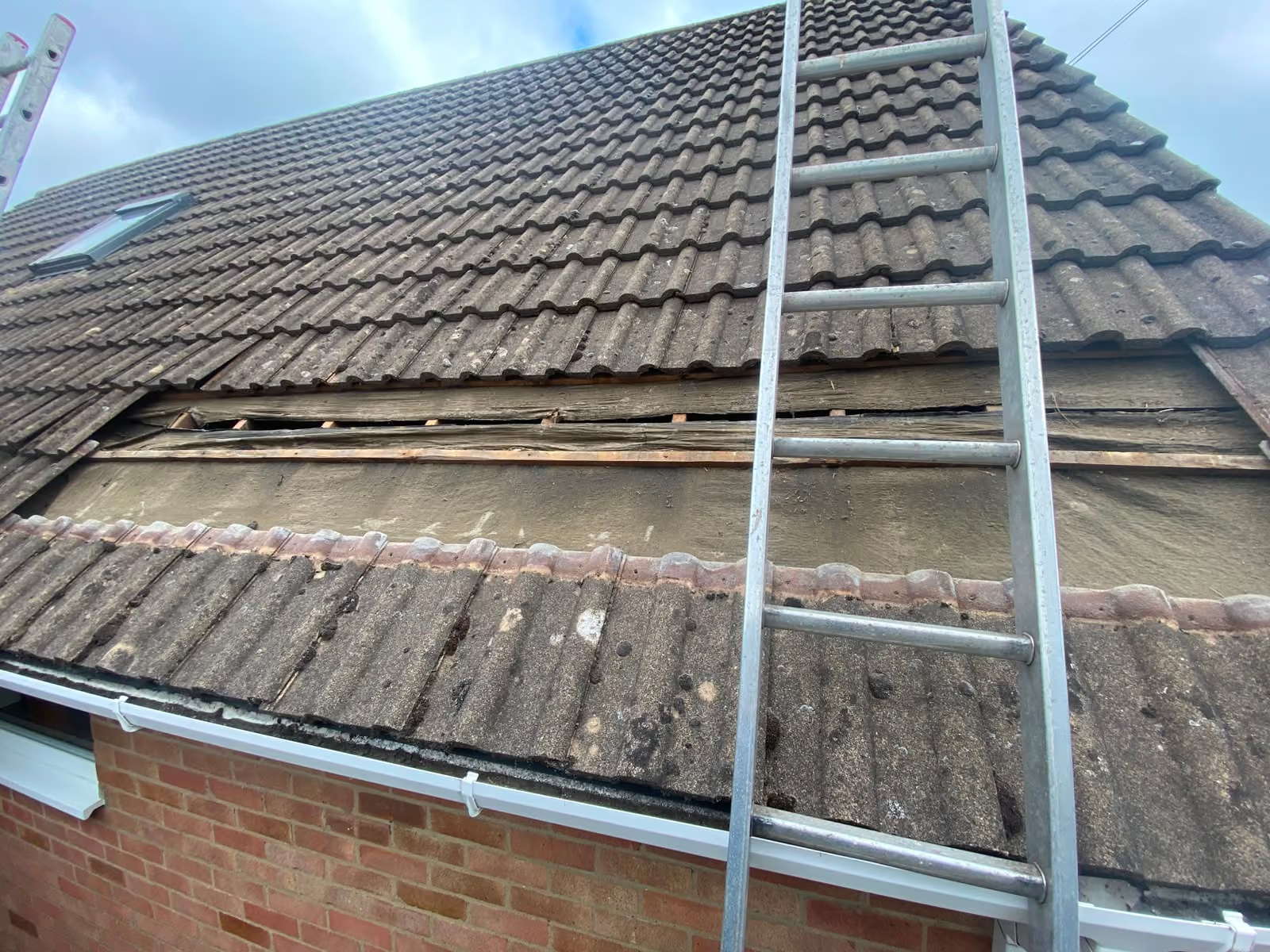
Battens, wherever water has been tracking past a broken tile or a torn lap for years.
Underlay, which goes brittle and tears at the laps where the wind works it.
Valleys and flashings, which take more water than anything else on the roof.
Gutters, which are cheap to clear and expensive to ignore.
What shortens it
Exposure. Wind on a hill, and salt air on a south facing slope near the sea.
Trees. Shade keeps a roof damp, and leaf litter blocks the gutters under it.
Gutters left blocked, so water runs down the wall and back under the tiles at the eaves.
A loft with no air moving through it, which cooks the underside of the roof in damp.
People walking on it. Every trip across a tiled roof cracks something.
Repairs bedded in yet more mortar, which puts the same failure back on the same clock.
Get an estimate
Tell us what the roof is doing
Estimates and advice are free. Ring and describe the problem, or send a photograph of it, and you will get a straight answer about whether it needs a repair or a new roof.
All work guaranteed.
Want us to take a look at the roof?
Leave a name and a number and we will ring back to sort a time. Estimates and advice are free.