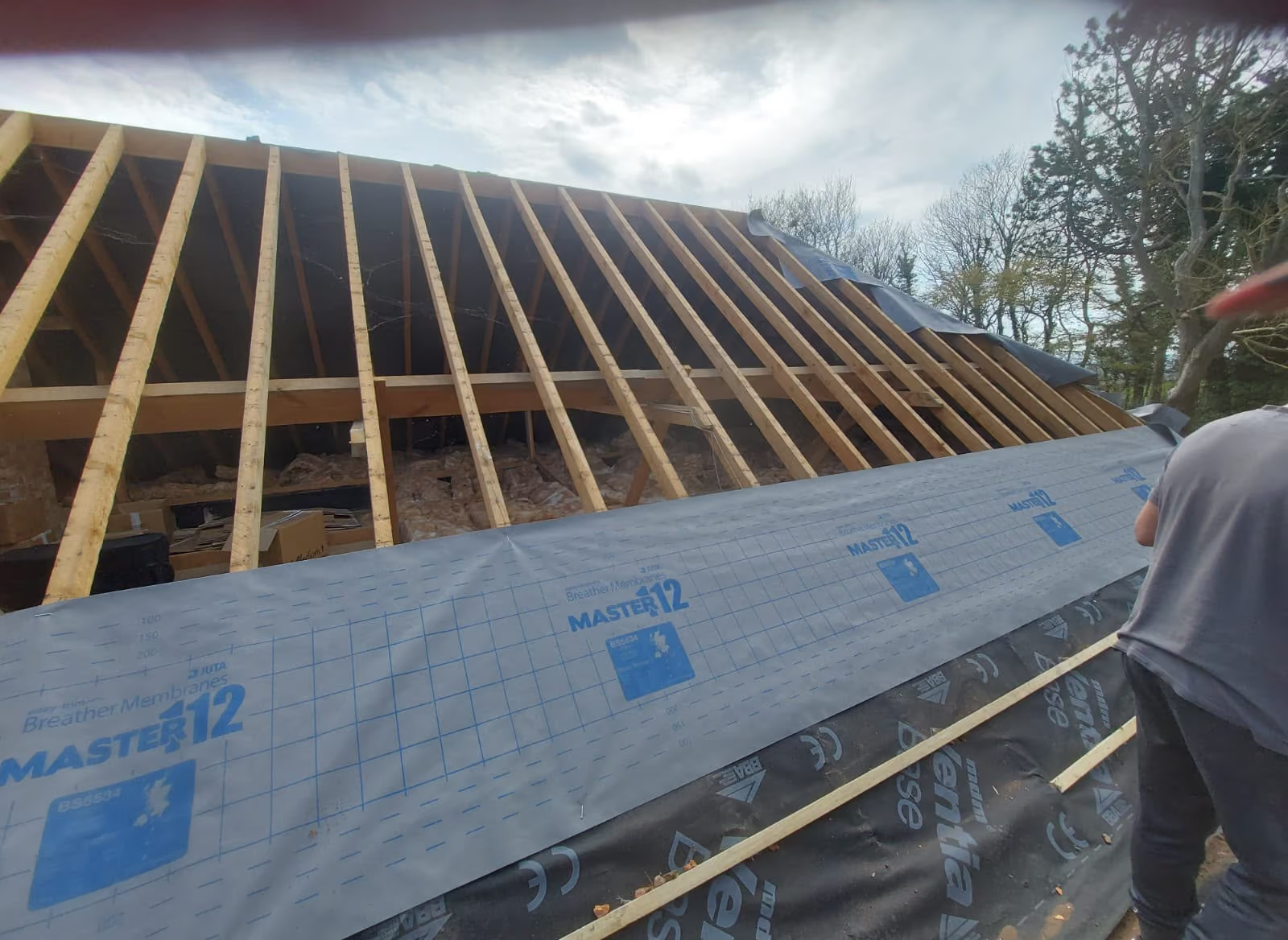
How do I know if I need a new roof?
Usually you do not. Moss, one slipped tile and cracked mortar are not reasons to strip a roof. A reroof is the answer when the battens, the underlay or the fixings have failed across the whole roof, rather than in one place.
Usually, you do not
Most roofs that look finished from the pavement have one fault, in one place, and that is a repair.
A roof is a system. Tiles, battens, underlay, mortar and gutters all age at different speeds. One of them failing does not condemn the rest.
Anyone who looks at a single wet patch and offers you a new roof has not looked at the roof.
The signs that do mean a reroof
Slates or tiles slipping all over the roof, not in one patch. On a slate roof that is nail sickness: the nails rust through and the slates let go one at a time, anywhere.
Battens rotted or split. Nothing new can be nailed to soft timber, so the covering has to come off to reach them.
Underlay torn or crumbling. Old bitumen felt goes brittle, then rips at the laps, and it is the second line of defence against rain.
Tiles flaking and shelling. Frost gets into the face of a porous tile and takes layers off it.
A roof line that sags in the middle, or dips between the rafters. That is structure, not covering.
Repairs coming back in a different place every winter. Once the whole roof is at that age, chasing faults costs more than replacing it.
The signs that do not
Moss. It holds water and it can block a gutter, but on its own it does not end a roof.
Tiles gone patchy or dark. Concrete tiles lose their surface colour long before they lose their strength.
One or two slipped tiles. That is an afternoon, not a reroof.
Cracked mortar at the ridge or the verge. That is a ridge or verge job, and a dry system replaces the mortar for good.
One wet patch after driving rain from one direction. That is usually a single detail letting water past.
A bird getting in behind a soffit. That is a roofline repair.
How long a repair buys you
On a sound roof with a local fault, years. The repair is as good as the roof round it.
On a roof whose underlay has already gone, a season or two. Money spent there is rent, not investment.
We will tell you which one you have got, and we will say so if the answer is that you do not need us yet.
What a reroof involves
The old covering is stripped off and taken away. The rafters are checked while they are open.
New battens go on over breathable underlay, which lets moisture out of the loft and keeps rain out.
The covering goes back on, either new tiles or slate, or salvaged tiles where they are sound.
The ridge and the verge are finished dry, so there is no mortar to crack. The gutters go back on last.
Common questions
- Do building regulations apply to a reroof?
- Often, but not at a quarter of the roof. Planning Portal sets two limits, and you need approval once either is broken: more than 25 per cent of the whole building envelope, which is the walls, floor, roof, windows, doors and rooflights counted together, or more than 50 per cent of the roof. Above either limit the work is notified to building control, who then sign it off, and the insulation gets looked at too and is improved where the roof allows it. The roofer can notify it, or the council can inspect the work.
- Do you need planning permission for a new roof?
- Not for a like for like reroof on most houses. Recovering a roof in the same shape counts as permitted development. The new covering must not sit more than 150mm above the old roof plane. Listed buildings and homes in a conservation area are different, so ask the council first.
Get an estimate
Tell us what the roof is doing
Estimates and advice are free. Ring and describe the problem, or send a photograph of it, and you will get a straight answer about whether it needs a repair or a new roof.
All work guaranteed.
Want us to take a look at the roof?
Leave a name and a number and we will ring back to sort a time. Estimates and advice are free.