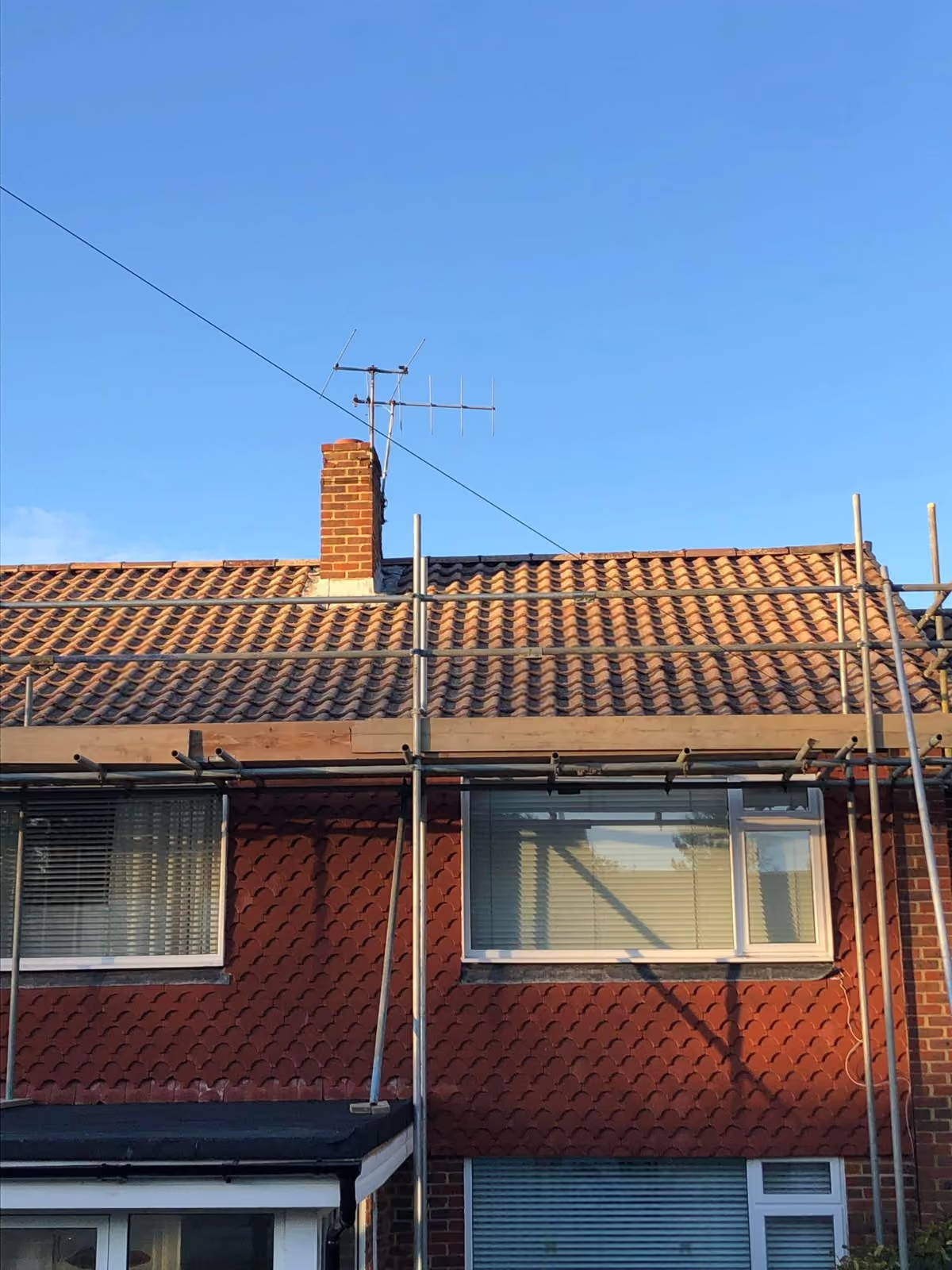
Roof repairs and new roofs in Reigate
Vision Roofing Services works out of Surrey and covers Reigate, along with Crawley, Brighton, Horsham, Redhill and Dorking. Free estimates and free advice, on any of the work listed below. Reigate has no single roof age. The town grew in bursts, and each burst left a different roof behind it.
Slate on the Victorian roads, tile everywhere else
Which roof you have in Reigate depends almost entirely on which decade built your road. The railway arrived in 1849, and the villa roads went up behind it. Wray Park was laid out through the 1850s and 1860s.
The railway also changed what those roofs were made of. Once the lines reached North Wales, cheap Welsh slate could travel anywhere, and the roof map of England went from red to grey. Reigate got its station just as the villas were going up, which is why so much of Victorian Reigate is slate rather than the clay tile the county had always used.
Older than that and it is local. Surrey built in handmade clay plain tile, and hung the same tiles down wall faces on the upper floor. Reigate Stone turns up here too, mined out of the greensand along the foot of the North Downs and used in the town since the Middle Ages. It is a soft stone, and it does not like a hard frost. What keeps it standing is a roof and a gutter that put the water somewhere else.
Then the twentieth century arrived twice. The Reigate Priory estate was sold in 1921, which released land right across the town and let the interwar semis follow. Council housing went up at Woodhatch through the 1950s. Those two rounds of building are the ones now sitting at the age where mortar bedding gives up.
The last thing about Reigate is what stands above it. The North Downs escarpment rises straight off the back of the town at Reigate Hill and Colley Hill, chalk under beech and yew. There are open commons in among the houses as well, at Reigate Heath and Wray Common. A lot of Reigate roofs sit under a mature tree, and everything that tree drops lands in a gutter.
What usually goes wrong here
Mortar ridges and verges reach the end together
The ridge is the line of tiles capping the very top of the roof. The verge is the sloping edge at the gable end. On the interwar semis and on the 1950s houses at Woodhatch, both sit in a bed of mortar and nothing else holds them. Mortar shrinks, cracks and washes out, the ridge caps start to rock in the wind and the edge tiles lift. Because those roads went up together, one house rarely gets there on its own. A dry ridge and a dry verge swap the mortar for fixings and caps, so there is nothing left up there to crack or repoint.
Slates go one at a time, and the valley goes quietly
A slate is nailed to a batten. The slate can be perfectly sound after a hundred and fifty years while the nail rusts away to nothing, and then one slides off on a windy night. The Victorian roads here also tend to be gabled, and where two slopes meet there is a lead lined valley running down between them. That valley is invisible from the pavement, it collects grit and moss, and the lead in it is usually as old as the house. It is the part that puts water through a bedroom ceiling rather than onto the path.
Gutters fill, and the wall behind takes it
Between the woods on the escarpment and the commons in among the streets, Reigate puts a lot into a gutter. A blocked one does not usually drip somewhere obvious. It backs up and comes over at a joint or a bracket, which lands the water straight onto the wall face. On a solid Victorian wall that soaks in rather than running off. The stain turns up inside the house long before anyone thinks to look up at the gutter.
Tile hung walls drop tiles, and soft stone suffers below
Tile hanging is plain clay tiles nailed down the face of a wall, a roof turned on its side. The nails rust the same way they do on a roof. One tile drops out and the course above it loses what was holding its bottom edge. The older walls here can be Reigate Stone, which is soft and weathers badly once it stays wet. Either way, the roofline above is what protects the wall. Water off a failed gutter or a lifted verge lands on the same strip of wall every time it rains.
In a conservation area you cannot just put back what you like
Reigate and Banstead has a number of conservation areas and several of them cover Reigate roads. In most of them the council has an Article 4 direction, which takes away the permitted development rights a house would normally have, so external changes need planning permission first. Swapping a roof covering for a different material is exactly the sort of change that gets caught. Trees are covered too, and cutting one back off a roof needs six weeks of written notice to the council. Worth checking which side of the boundary a house sits on before the work is planned, not after.
What we do in Reigate
- Roof repairs, leaks and slipped tiles
- New roofs and reroofs in tile and slate
- Flat roofs, repaired and replaced
- GRP fibreglass flat roofs
- Dry verge caps, fitted over the gable edge
- Dry ridge systems, fitted over the ridge line
- Fascias, soffits, guttering and downpipes in UPVC
- Gutter cleaning, from £30
- Painting the outside of a house
Nearby towns we also cover
- Roof repairs and new roofs in Redhill
- Roof repairs and new roofs in Dorking
- Roof repairs and new roofs in Crawley
Not sure yet what the roof needs? Our roofing advice answers the questions we get asked most, before anybody comes out to look.
Get an estimate
Roofing work in Reigate
Estimates and advice are free. Ring and describe the problem, or send a photograph of it, and you will get a straight answer about whether it needs a repair or a new roof.
All work guaranteed.
Want us to take a look at the roof?
Leave a name and a number and we will ring back to sort a time. Estimates and advice are free.