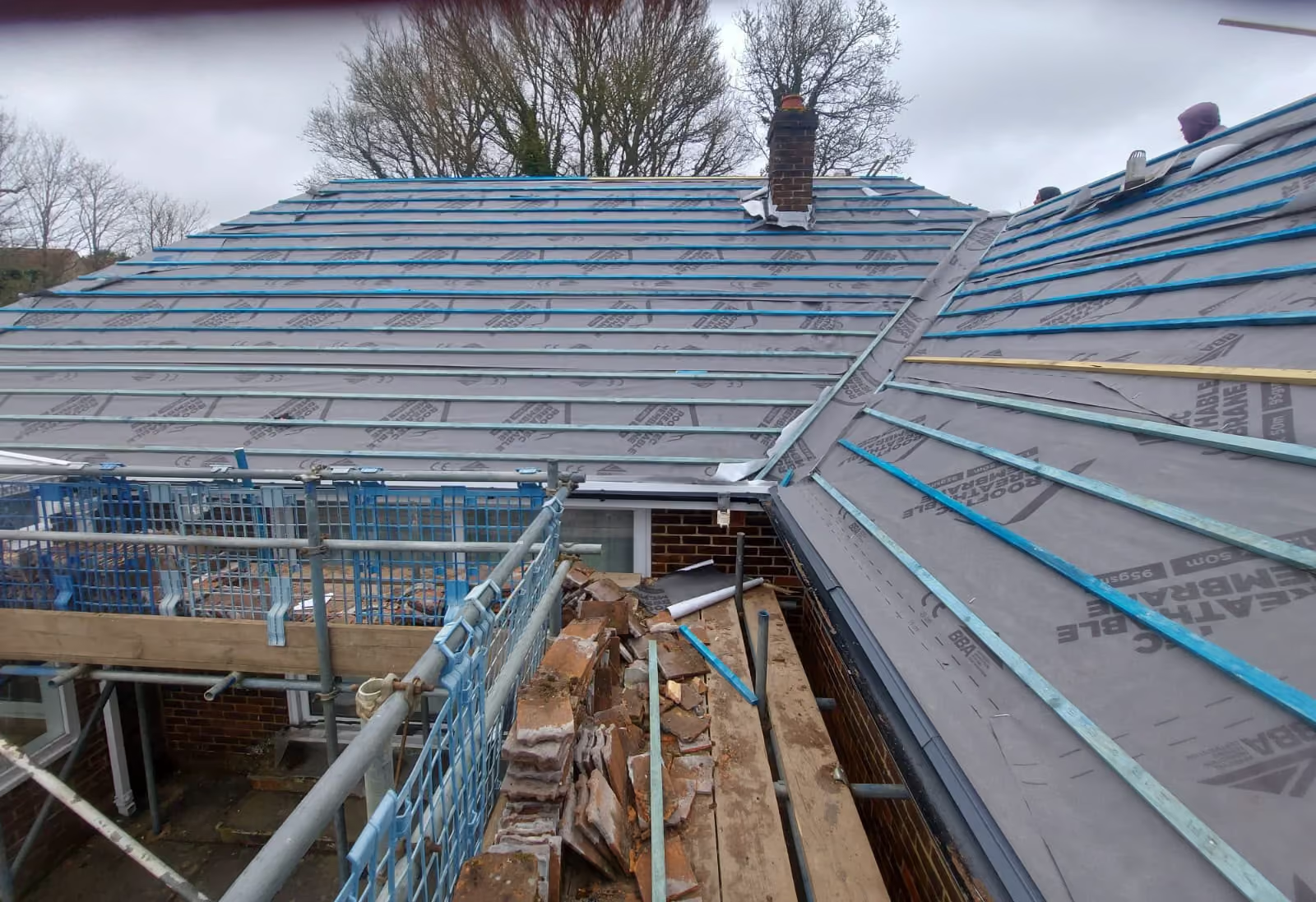
Fascias, soffits, guttering and downpipes in UPVC
We take the old timber boards off the roof edge and put UPVC fascias and soffits in their place. The fascia is the board the gutter hangs on. The soffit is the flat board underneath it. When they go soft the gutter goes with them, so they get replaced together.
Last updated
What gets replaced when a roofline is done
A full job takes the old timber off and puts UPVC in its place. Fascias, soffits, guttering, downpipes, cladding, and the apex boards at the point of a gable. The old gutter comes off with the fascia, because a new gutter on a soft board is a wasted job.
With all of it off, the ends of the rafters are open to view. That is the moment to see whether any of them have gone soft, and to tell you what we have found.
Why timber fascias fail
A timber fascia sits behind the gutter, in the wettest line on the house. A gutter joint that drips, or a gutter that overflows every autumn, keeps that board wet all winter.
Paint holds it off for a few years. Once the paint cracks, water gets in behind it, the board swells, and the screws holding the gutter brackets lose their grip. That is when the gutter starts to sag and the drips get worse.
Guttering, downpipes and where the water goes
Guttering is the easy part to see and an easy part to get wrong. It needs a fall towards the downpipe, brackets close enough together to stop it sagging, and joints seated properly.
Downpipes take the water to a gully or a drain. A downpipe emptying onto a path, or into a gully that is blocked, puts all that water back against the wall. That is often what caused the damp patch showing inside.
Cladding, apex boards and the bits people forget
Cladding covers a timber panel, usually on a gable or the side of a dormer, that would otherwise want painting every few years. Apex boards are the two boards meeting at the point of a gable.
Both are often the last painted timber left on a house. Doing them while the access is already up means nothing is left half finished and nothing needs going back to.
Fascia and soffit replacement, board by board
A fascia and soffit replacement is done one elevation at a time, so the house is never left open along its whole roofline. The run of gutter on that side comes down first, because it hangs on the fascia. The fascia is then taken off the rafter ends, and the soffit board behind it follows.
The new fascia has to be deep enough to cover the rafter ends and to carry the felt or eaves tray into the gutter, so the depth is set by the roof, not by what was there before. Soffit boards are cut to the width of the overhang and fitted with ventilation. Where a soffit is wide, it is supported on timber bearers rather than left spanning on its own.
At a gable, the fascia and soffit are closed off with a boxed end, which is one of the details that shows whether a roofline was fitted with care. Joint trims and corner pieces finish the run, and the gutter goes back on at a fall.
Why UPVC fascia and soffit boards replace timber
Timber at the eaves needs painting every few years, and once the paint film cracks the board drinks water from behind the gutter. UPVC is a solid plastic board that cannot rot, never needs paint, and keeps its shape in the wettest line on the house.
Replacing the timber rather than covering it means nothing wet is left sealed in behind the new face. The trade-off is more work on the day, because every board comes off and the rafter ends are made good before anything new goes up. The result is a roofline that gets a wash now and then instead of a repaint.
Where this work is covered
We cover roofline work from Surrey, in Crawley, Brighton, Horsham, Reigate, Redhill and Dorking. If the house sits outside that list, ring and ask first.
Horsham housing is older and more mixed, plenty of it still has painted timber at the eaves, and heavy tree cover keeps that timber wet.
How the job goes
What happens when we do your fascias and soffits
-
 01
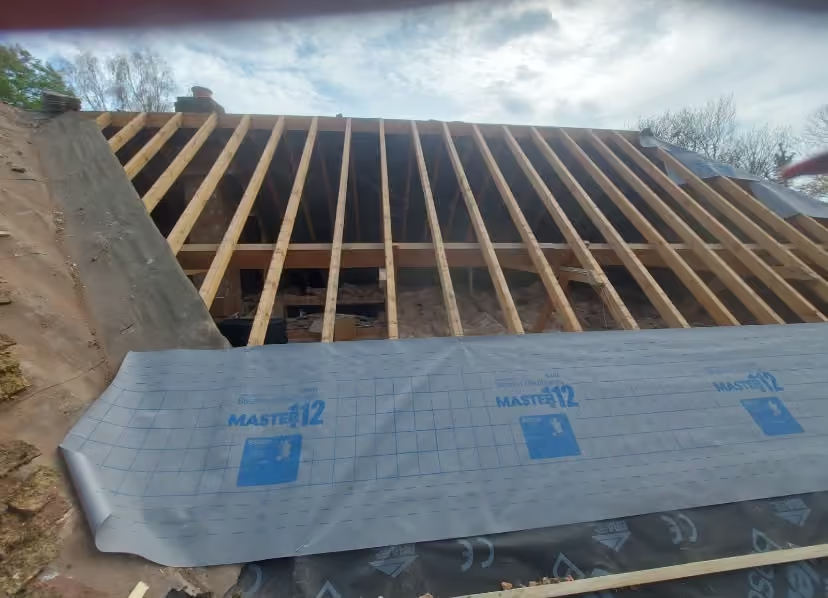
Look from underneath
Most of a fascia can be judged from the ground. A sagging gutter, peeling paint, green staining down the wall and a soffit that has dropped at one end.
-
 02
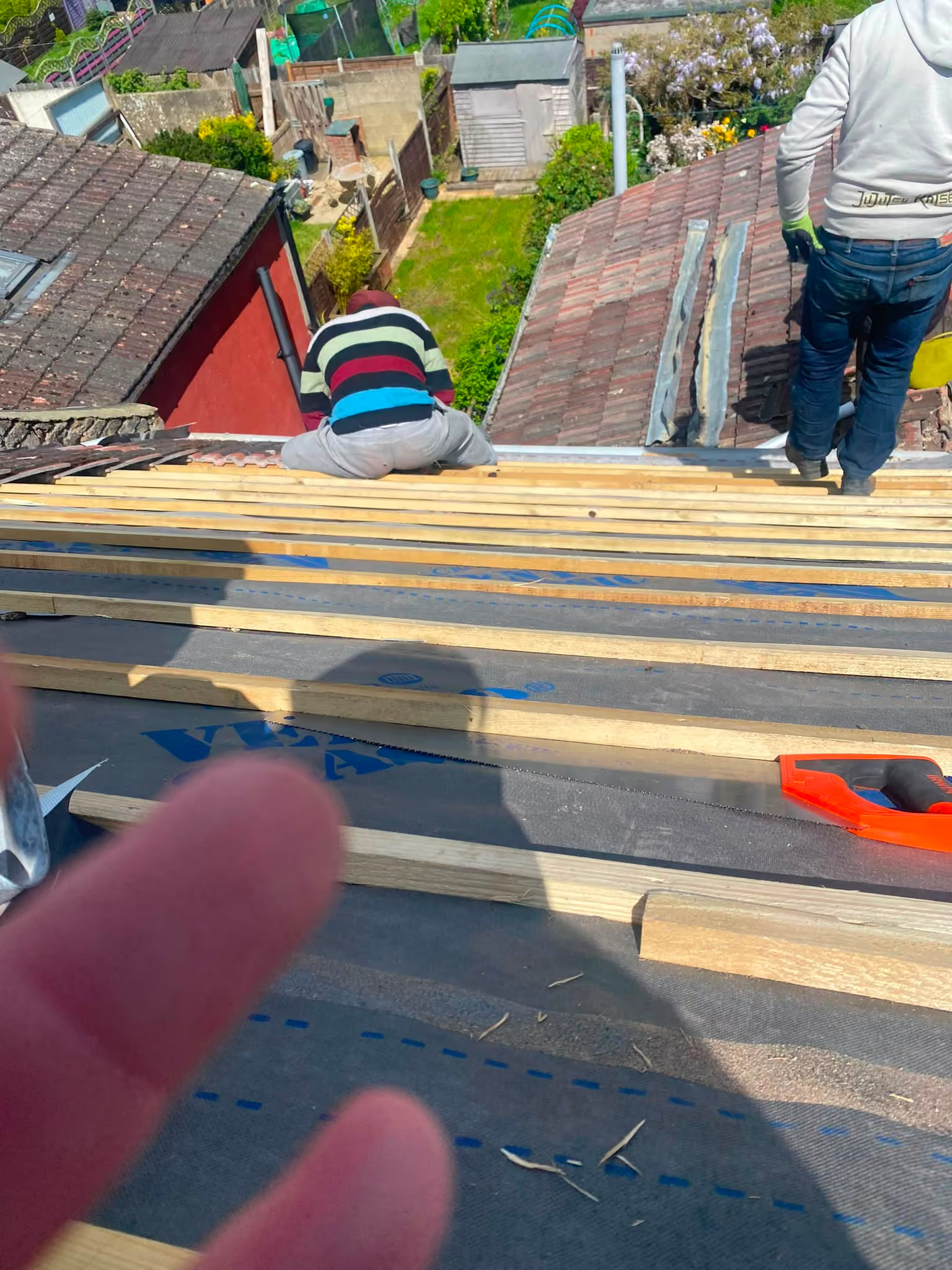
Sort the access
A ladder or a tower does most runs. A high or awkward one needs a scaffold, and we tell you that at the estimate, not after the work starts.
-
 03
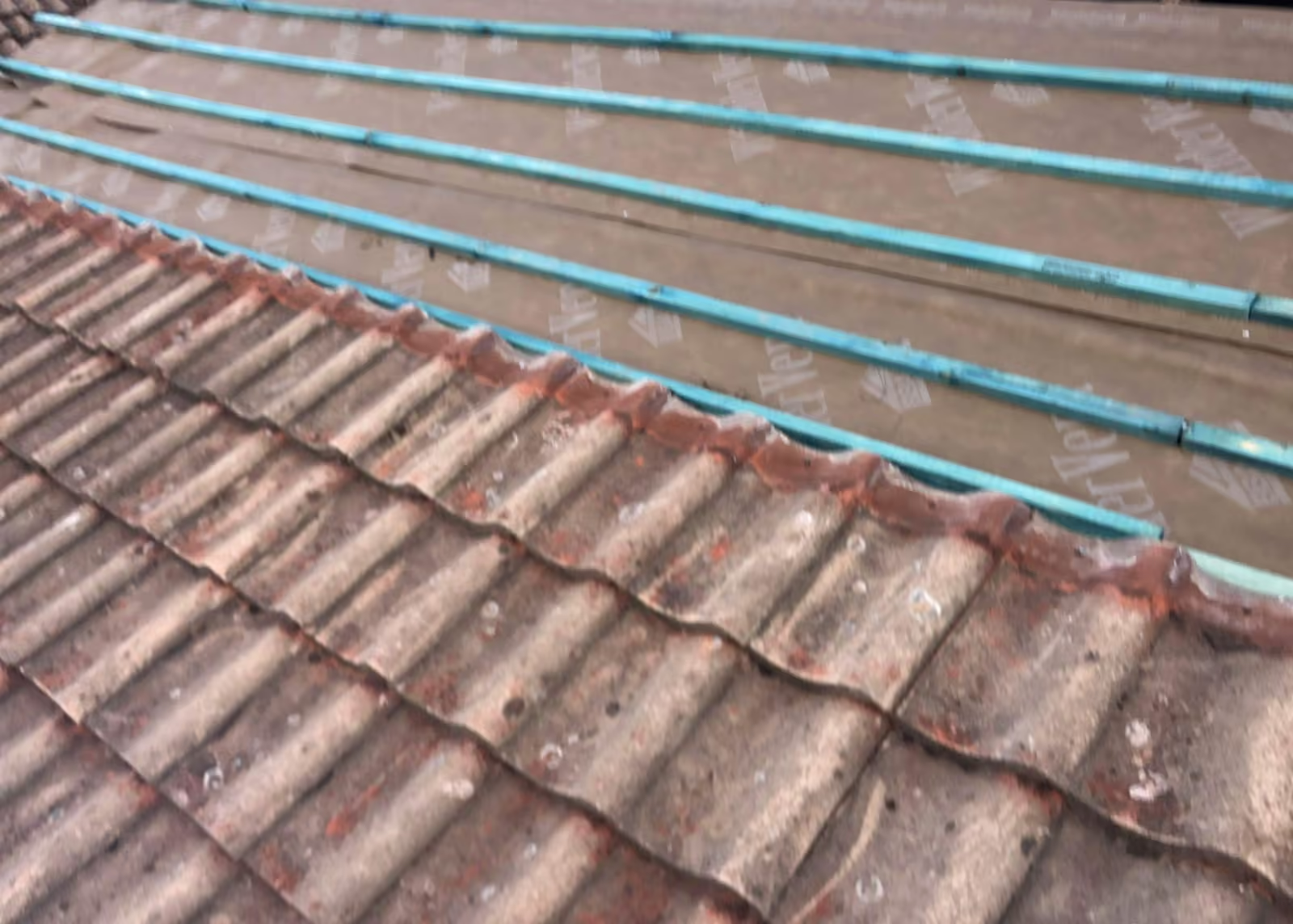
Old timber off
Fascia, soffit and gutter come off together. With the rafter ends open, anything soft or rotten gets seen and sorted before a new board goes anywhere near it.
-
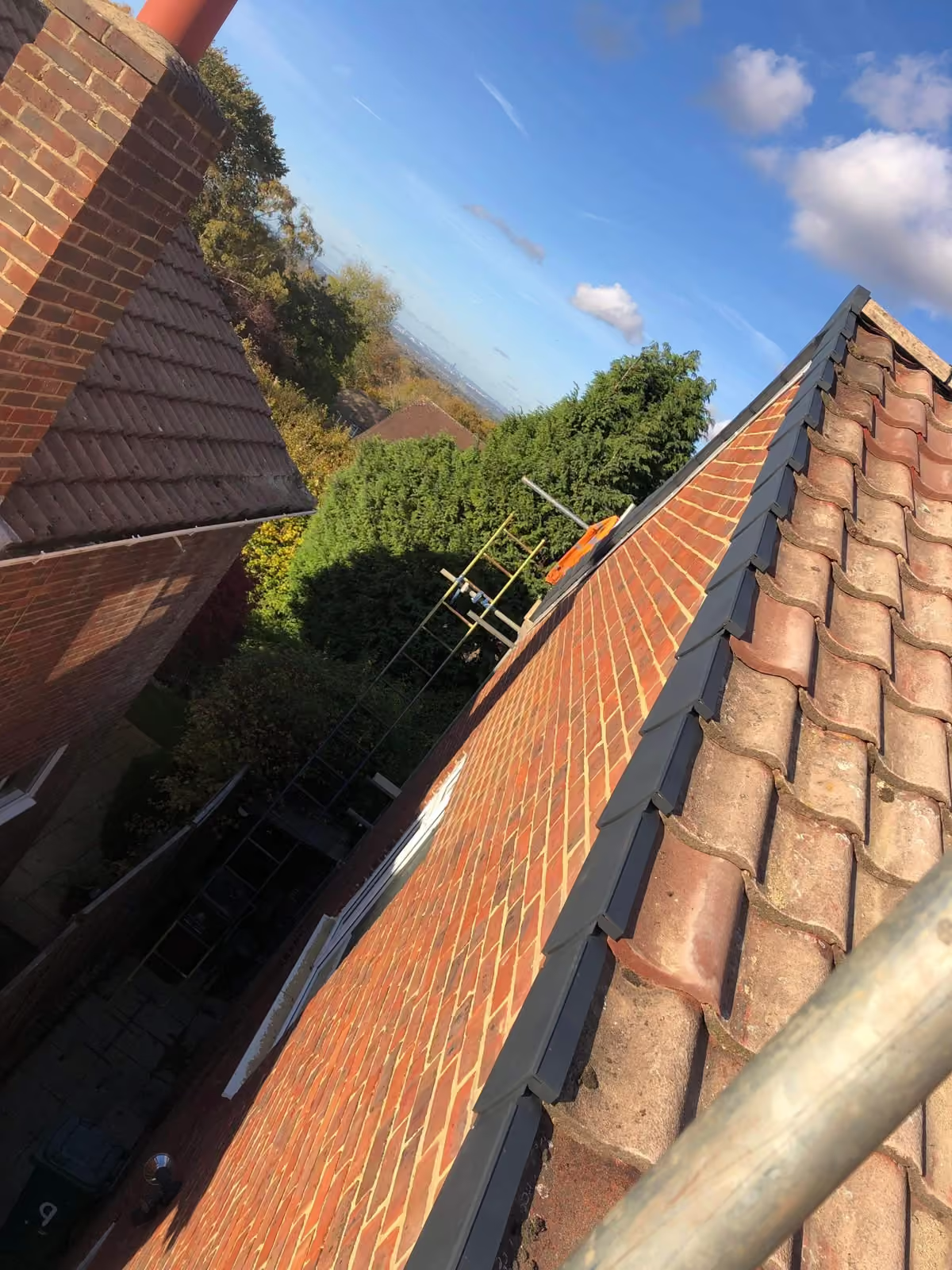 04
New boards on
UPVC fascia and soffit go on with vents, so air can still get into the loft at the eaves. Boards are fixed with matching pins rather than nailed through the face.
-
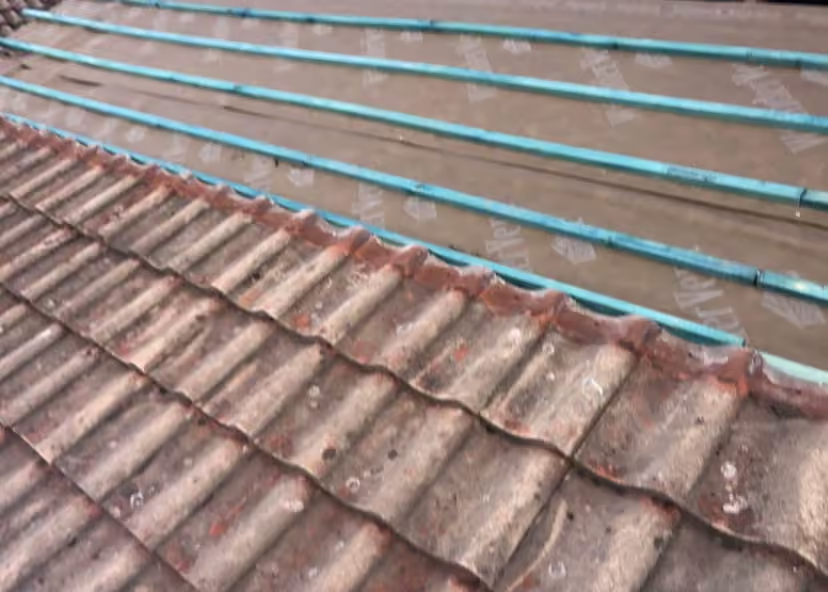 05
Gutter, downpipe, water test
New guttering is set to a fall towards the downpipe and the joints are seated. Then water goes down it to check that it runs and does not drip.
Common questions
- Can you just replace the gutter and leave the fascia?
- Sometimes. If the board behind it is sound and painted, a new gutter on its own is fine. If the board is soft, the brackets have nothing to bite into, and the new gutter will sag exactly the way the old one did.
- What is capping over, and is it any good?
- Capping means leaving the old timber in place and covering it with a thin sheet of UPVC. It looks the same on day one. If the timber underneath is wet or rotten it stays wet, sealed in behind the new sheet. We take the old boards off instead.
- Does UPVC need painting?
- No. It is not painted, it is washed down. It does mark, and white boards go grey where trees drip on them, but soapy water and a soft brush bring them back.
- Will the loft still get air once the soffit is boxed in?
- It has to. New soffits go on with a vent strip or vented panels, so air still gets in at the eaves. Sealing a loft up is how condensation starts forming on the underlay.
- Do the boards come in anything other than white?
- Yes. White, black, grey, cream and woodgrain finishes are the usual ones, and the guttering and downpipes get matched to whatever you pick.
Roofing advice on this
Plain answers to the questions we get asked most about this work, written before you ask us for a price.
Get an estimate
Tell us what the roof is doing
Estimates and advice are free. Ring and describe the problem, or send a photograph of it, and you will get a straight answer about whether it needs a repair or a new roof.
All work guaranteed.
Want us to take a look at the roof?
Leave a name and a number and we will ring back to sort a time. Estimates and advice are free.