Roof leaking when it rains: where is it coming from?
Rain gets in where a roof is joined or broken, not usually through the middle of a sound slope. The usual places are the flashing where the roof meets a chimney or a wall, a slipped or cracked tile, a valley, loose ridge or verge mortar, a flat roof joint or outlet, or a blocked gutter backing water up under the eaves.
Where does rain get into a roof?
Flashing where the roof meets a chimney or a wall. Lead that has lifted, split or pulled out of its mortar joint lets rain run down the inside of the brickwork.
Slipped or cracked tiles. A tile that has slid down or split across leaves a gap, and on an older roof with tired felt underneath there is little to stop what gets through.
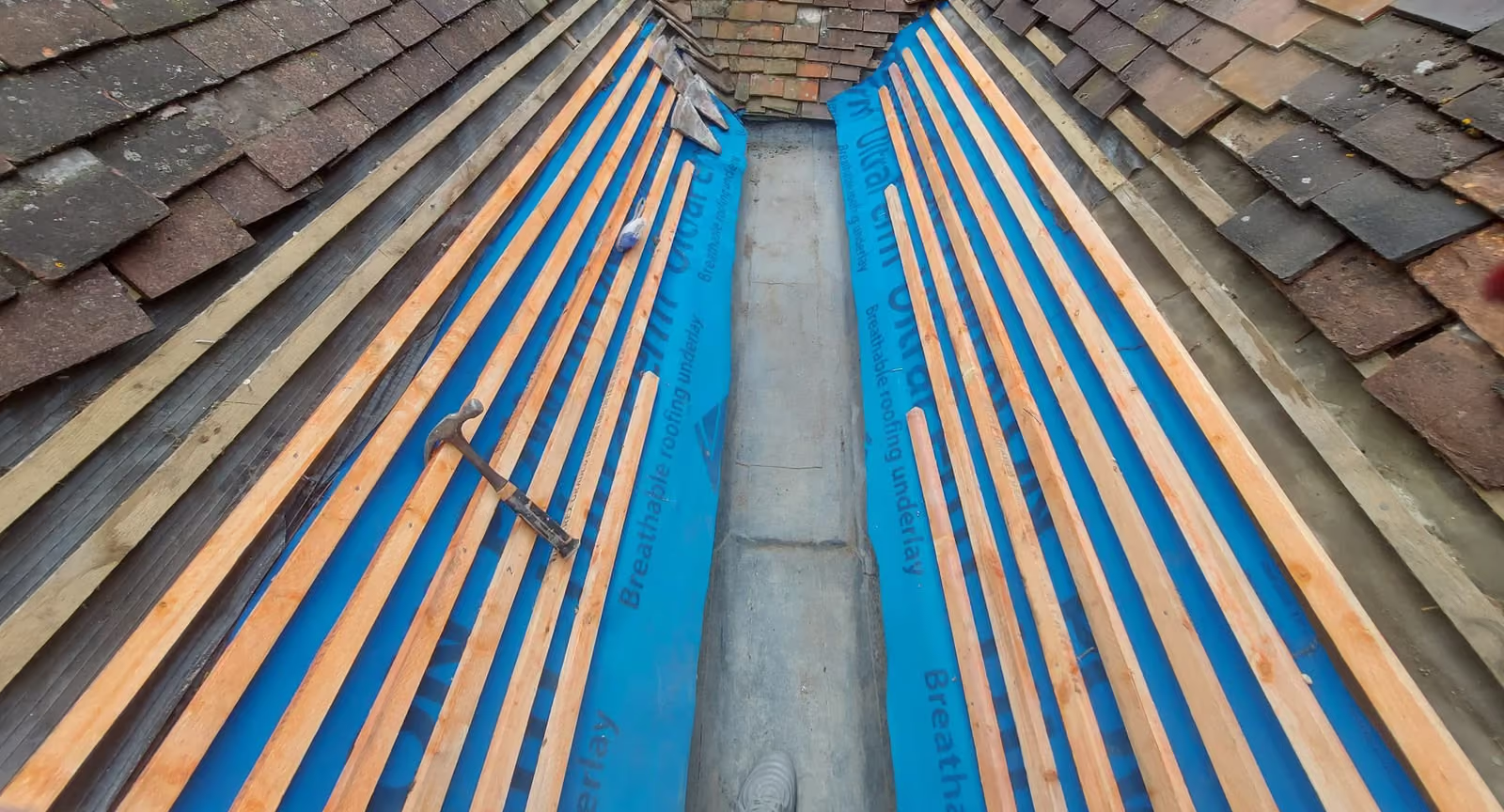
Valleys, the channel where two slopes meet. Everything off both slopes runs down it, so a split in the lining, or a build up of moss and leaves, sends water over the edge and under the tiles.
Ridge and verge mortar. The sand and cement along the top of the roof and down the gable edge cracks and drops out over the years, and wind driven rain gets in behind it.
Flat roof joints and outlets. Water sits on a flat roof, so it finds any split at a seam, round an upstand, or where the covering is dressed into the outlet.
Gutters backing up under the eaves. A blocked gutter or downpipe fills, spills backwards over the fascia and runs in under the bottom row of tiles.
Why the wet patch is rarely under the hole
Water that gets past a tile lands on the underlay or a rafter and runs downhill before it drops. So the stain on the ceiling is usually lower down the slope than the place it got in, and it can be off to one side.
A patch against the chimney breast points at the chimney flashing first.
A patch along the top of an outside wall, at the edge of the ceiling, points at the gutter and the eaves.
A patch under the line where two roofs join points at the valley.
A patch under a flat roof points at that roof, but water can travel along the deck before it drips, so the split is not always straight above.
A leak that only shows in rain from one direction points at the side of the roof facing that weather: the verge, the ridge or a flashing.
A wet patch that turns up in cold dry weather, days after any rain, may be condensation rather than a leak. Our guide on a roof leaking when it is not raining covers how to tell the two apart.
How to narrow it down from the loft
Go up during rain or just after it, with a torch. That is when the trail is still wet enough to follow.
Stand on the joists or on boards only. The ceiling between them will not take your weight.
Find the damp patch in the insulation above the ceiling stain. Then follow the wet up the rafters and the underlay towards the ridge. The highest wet point is the closest you will get to where it comes in.
Look for daylight through the underlay, dark tide marks on the timber, and drips hanging off the underside of the felt.
Photograph what you find, and write down which way the wind was blowing.
Under a flat roof or a boarded loft you may not see anything at all. Note where the stain is and what the weather was doing instead. That still tells us a lot.
What not to do
Do not go up on the roof. Wet tiles are slick, a slipped tile means the fixings round it have already failed, and there is nothing at the top of a domestic roof to tie on to.
Do not lean a ladder on the gutter or reach out of a window to look. Photograph it from the ground instead.
Do not smear sealant or mastic over the joint you think is to blame. It can trap water behind it, it hides the real fault, and it has to come off again before a proper repair.
Water coming through the ceiling right now?
Our storm damage guide sets out the first hour in order: a bucket under the drip, furniture and anything electrical moved clear, the circuit off if water is near a light fitting, and photographs from the ground. It applies just the same to a leak with no storm behind it.
Once it is under control, draw round the edge of the stain in pencil and write the date beside it. The next rain will tell you whether it is growing.
What does a leak repair usually cost?
These are MyJobQuote's published UK figures, not our price. Its roof repair cost guide, last updated on 27 August 2026, puts a minor roof leak repair at £150 to £400 and a major one at £400 to £1,200 and above.
For the entry points above, the same guide puts lead flashing repair or replacement at £250 to £700, chimney flashing repair at £300 to £800 and a roof valley repair at £300 to £900.
The real number depends on what is wrong and how hard it is to reach, so we give a free estimate. Our roof repair cost guide sets out the wider picture, including scaffolding.
What happens next
Ring 07477 536 273 and tell us where the stain is, what you saw in the loft and what the weather was doing when it appeared.
The estimate is free, and it only turns into a charge if we do the work. Our repairs carry a five year guarantee.
Where these figures come from
Every price on this page is quoted from a published cost guide, named in the text beside it. Nothing here is averaged or estimated.
MyJobQuote, Roof Repair Cost Guide: How Much Do Roof Repairs Cost? (UK), page dated 27th August, 2026 (footer: Last updated 27/08/26), https://www.myjobquote.co.uk/costs/roof-maintenance, fetched 2026-09-28
Get an estimate
Tell us what the roof is doing
Estimates and advice are free. Ring and describe the problem, or send a photograph of it, and you will get a straight answer about whether it needs a repair or a new roof.
All work guaranteed.
Want us to take a look at the roof?
Leave a name and a number and we will ring back to sort a time. Estimates and advice are free.