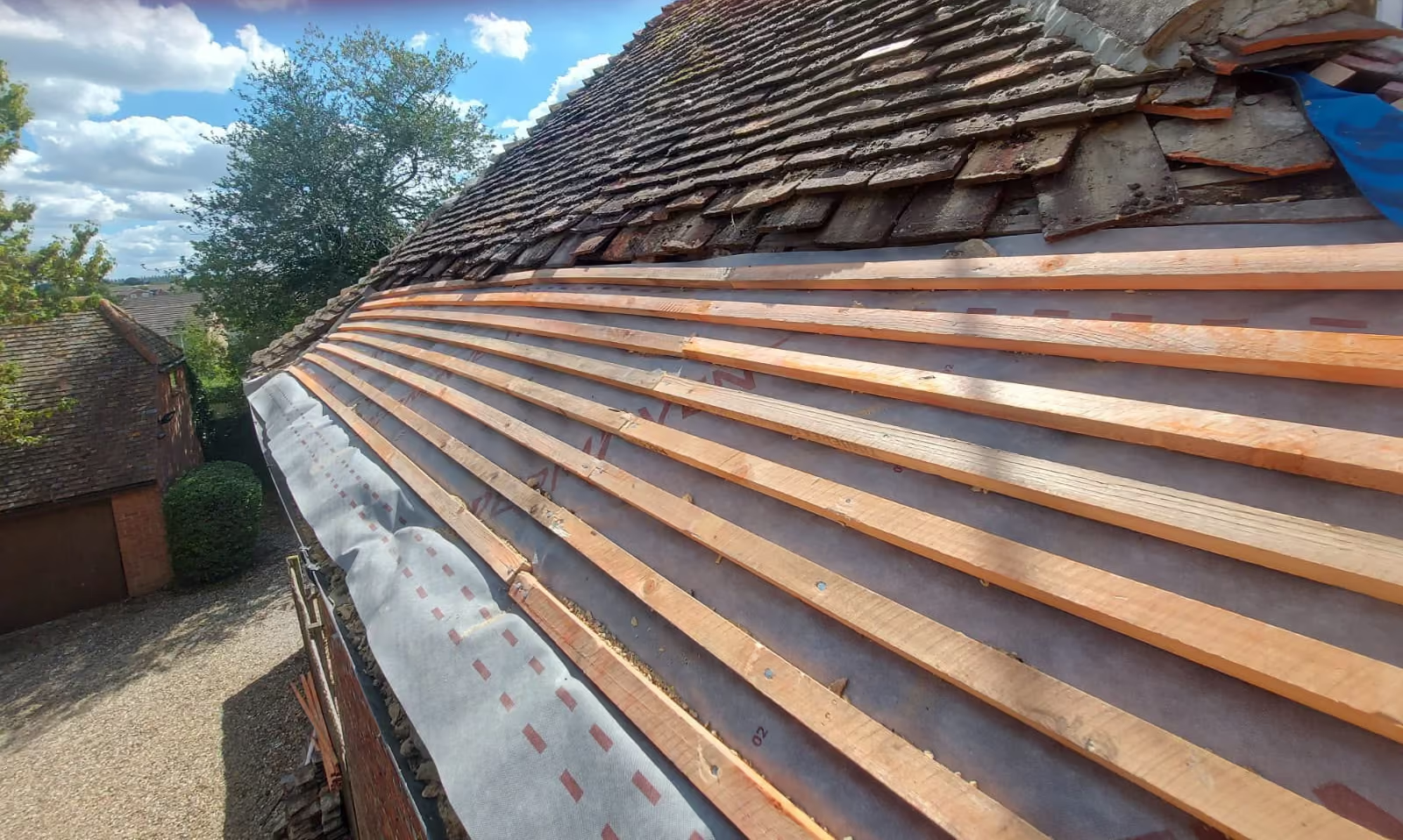
Dry ridge systems, fitted over the ridge line
The ridge is the top line of the roof, where the two slopes meet. A dry ridge system holds every ridge tile down with a fixing instead of bedding it in mortar.
What is a dry ridge system?
A dry ridge system fixes every ridge tile to the roof mechanically instead of bedding it in sand and cement. A ventilated roll runs the length of the ridge and seals onto the tile courses either side. A batten runs under it, and each ridge tile is screwed down into that batten through a bracket or a clamp. There is no mortar to crack, so there is nothing to repoint.
It also lets the roof breathe. The roll is vented, so warm damp air from the loft leaves at the highest point instead of condensing on the underlay.
Why bedded ridges fail
Mortar bedding is a strip of sand and cement holding the ridge tiles down and filling the gap under them. It is rigid, and the roof is not. Timber moves with heat and damp, the tiles move with it, and the mortar cracks.
Once it has cracked, water gets behind it and frost breaks it up. Then whole lengths let go, and a loose ridge tile in wind is heavy and sharp. Crumbling grey mortar under a lifted ridge tile is the classic sign.
Maintenance free dry verge and ridge systems, our printed line
That is the line printed on our leaflet, and dry ridge is half of it. There is no mortar to crack, so there is nothing to repoint.
Every ridge tile is held by its own fixing. One tile working loose does not take the run with it. That is what happens when a single strip of mortar does the whole job.
Bedded ridge against dry ridge
A bedded ridge is held on by mortar and nothing else. It looks right the day it is laid, and it wants doing again once the mortar has gone.
A dry ridge is held by fixings, sealed by a ventilated roll, and open to the air underneath. On a roof that is otherwise sound, converting the ridge is the job that stops the same call coming back every few winters.
Where this work is covered
We cover ridge work from Surrey out to Crawley, Brighton, Horsham, Reigate, Redhill and Dorking. Past that, ring and ask first.
Streets in Crawley were roofed to one house type in the 1950s and 1960s. The mortar on every ridge went on in the same season, so it fails along the whole road at once.
How the job goes
What happens when we do your dry ridge
-
 01
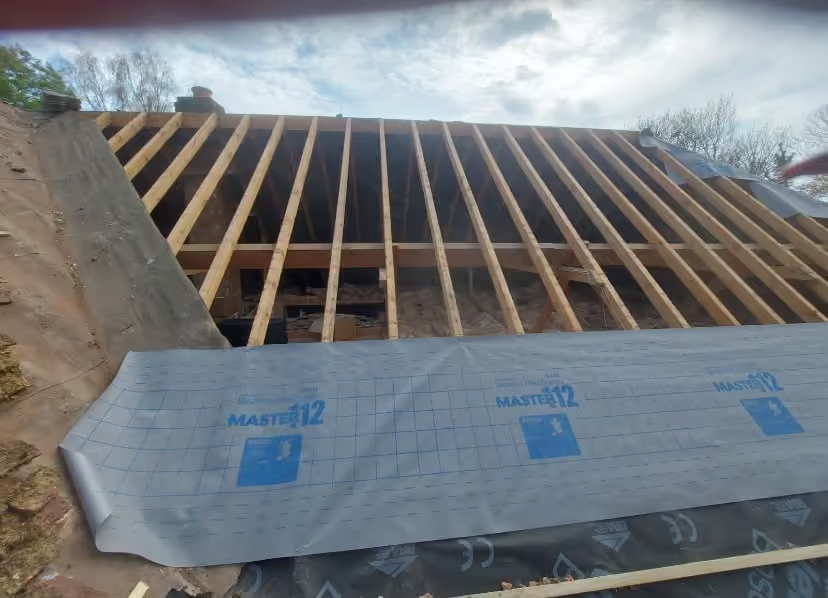
01Look at the whole ridge
We look at what the mortar is doing along the full run, not just at the cracked end. Hollow mortar, lifted tiles and daylight showing through all say the same thing.
-
 02
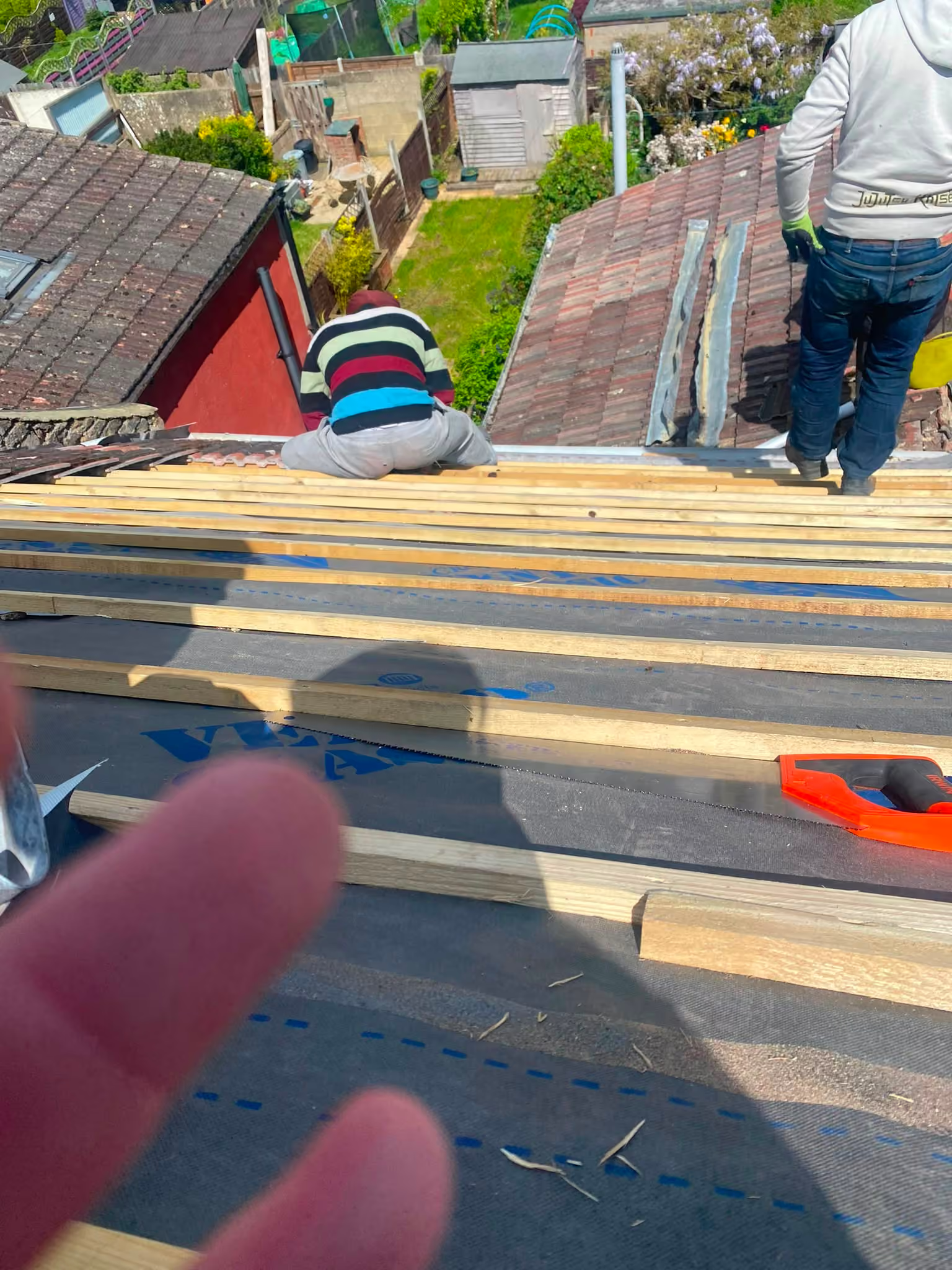
02Ridge tiles off
Ridge tiles are lifted and set aside. Sound ones go back on. The old bedding mortar is cut off the roof and cleaned off the tiles.
-
 03
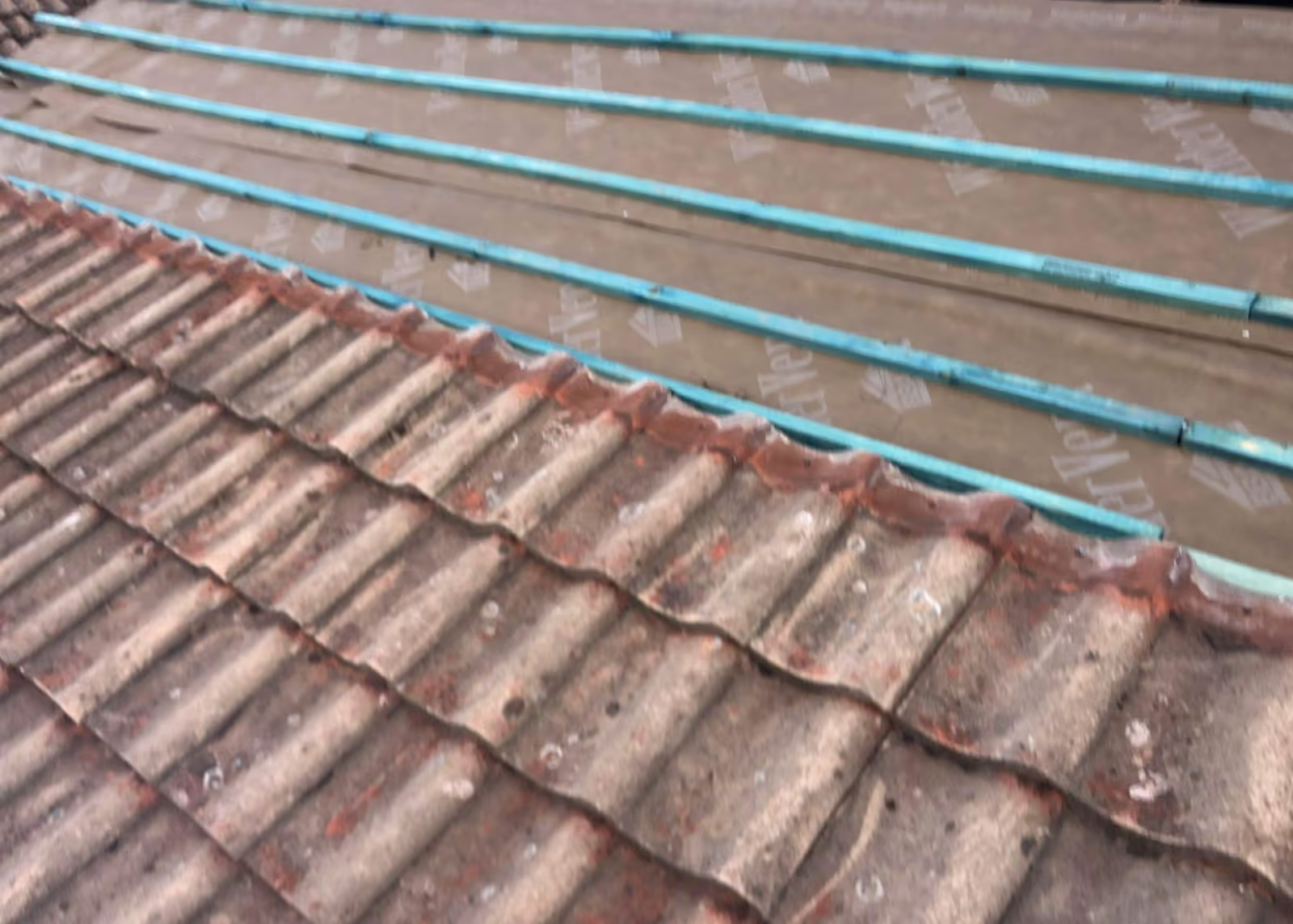
03Batten and ventilated roll
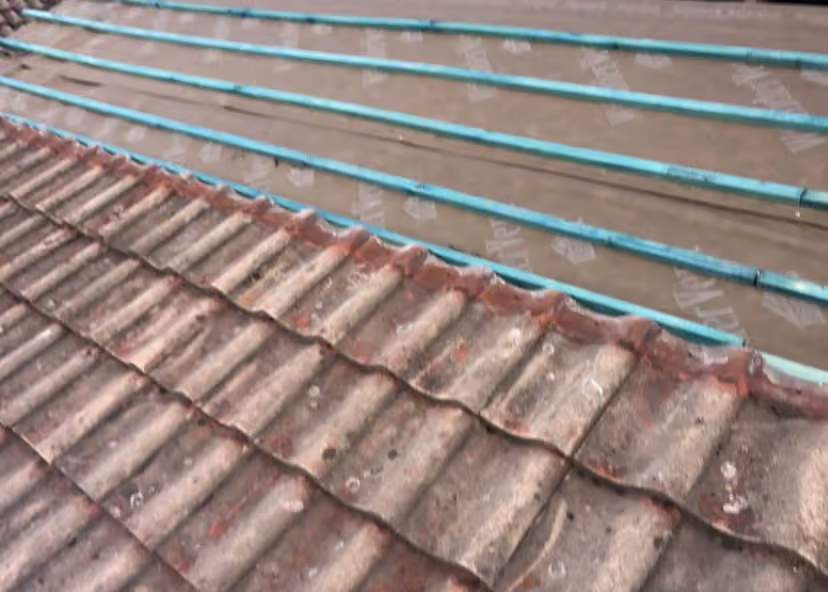
A ridge batten is fixed along the apex at the right height. Ventilated roll is run out over it and pressed down onto the tile courses either side.
-
 04
04Fix every tile
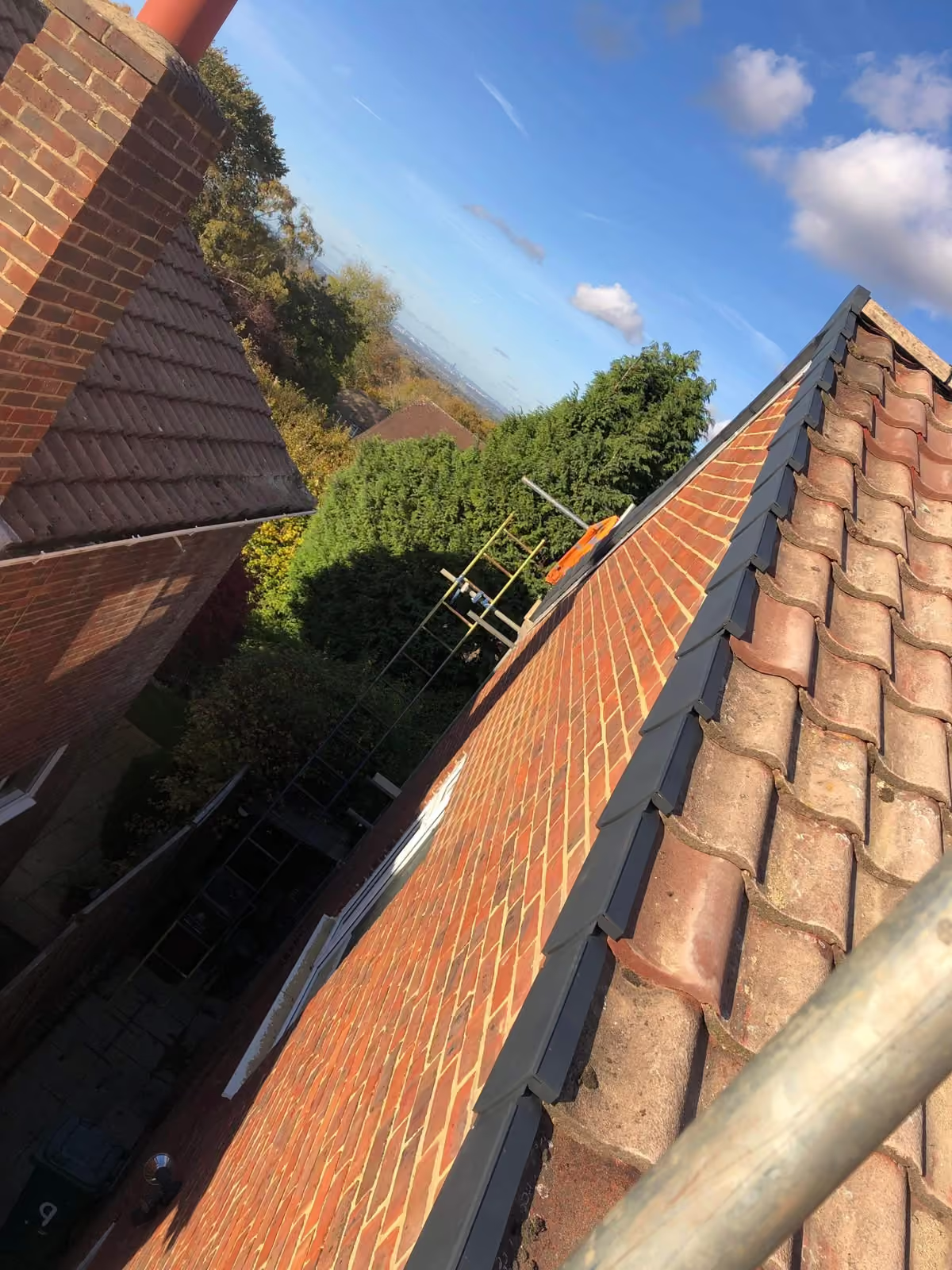
Each ridge tile is screwed down into the batten through a bracket or a clamp. Every tile gets its own fixing, so none of them leans on its neighbour.
-
 05
05Ends, hips and clear up
The end tile is closed off. Hips are done the same way, held at the bottom by a hip iron, the metal bracket that stops the run sliding. Old mortar goes with us.
Common questions
- Do the ridge tiles have to be replaced?
- Usually not. Sound ridge tiles are lifted, cleaned off and put back onto the new fixings. Cracked or chipped ones get swapped, and it is worth doing while the run is open rather than going back up later.
- Can a dry ridge be fitted without taking the whole roof off?
- Yes. Only the ridge line is touched. The tiles down the slopes stay where they are, unless one is already broken and it makes sense to change it while access is there.
- Does dry ridge work on hips as well?
- Yes. A hip is the sloping ridge where two slopes meet at a corner, and it takes the same treatment. The bottom of the run is held by a hip iron so nothing can slide off the end.
- Will a dry ridge stop my loft getting damp?
- It helps. The roll is vented, so warm damp air from the loft can leave at the top of the roof. Air getting in at the eaves matters just as much, and one without the other only does half a job.
- Is a dry ridge noisy in the wind?
- It should not be. Every tile is clamped down and the roll is pressed into the profile of the tiles, so there is nothing loose to rattle. A ridge that whistles usually has a fixing that was missed.
Related work
Roofing advice on this
Plain answers to the questions we get asked most about this work, written before you ask us for a price.
Get an estimate
Tell us what the roof is doing
Estimates and advice are free. Ring and describe the problem, or send a photograph of it, and you will get a straight answer about whether it needs a repair or a new roof.
All work guaranteed.
Want us to take a look at the roof?
Leave a name and a number and we will ring back to sort a time. Estimates and advice are free.