Why is my roof leaking when it is not raining?
Most of the time it is not a leak. Warm damp air from the house rises into a cold loft, meets the underside of the roof and turns back into water. That is condensation, and it shows up in cold weather, days after any rain.
Condensation and a leak look different
Condensation is spread out. Damp shows across a wide area of ceiling, or in more than one room, and it is worst after a cold clear night.
In the loft it drips off the points of nails and off the underside of the underlay. The timbers feel damp all over. There may be black spotting on the felt and on the rafters.
A leak is in one place. It follows rain within hours, dries out between, and comes back on the same spot every time. There is often a brown tide mark round the edge.
Feel the insulation. Damp all over means air. Wet in one patch means water coming in.
Why is my roof leaking in winter?
Cold roof, warm house, closed windows. That is the winter recipe for condensation.
Every shower, kettle and load of washing dried indoors puts water into the air. It rises, finds the loft hatch and any gap round pipes, and lands on the coldest surface in the building.
A bathroom fan that vents into the loft rather than out through the roof or wall does the same thing much faster.
Snow adds a second cause. It sits on the roof, melts against the warmer part, runs down to the cold eaves and refreezes there. Water then backs up behind the ice and gets under the tiles.
Things that wet a ceiling with no rain overhead
A cold water tank in the loft overflowing, or its overflow pipe running back inside.
A weeping joint on a pipe in the loft, or condensation forming on a cold pipe with no lagging.
A gutter blocked solid, holding water against the wall and the fascia long after the rain stopped.
Rain that came in during the last storm and is still working its way through plaster. Ceilings can take days to show it.
A flat roof holding a pond, where water sits until it finds a pinhole.
Lead flashing where the roof meets a chimney or a wall, holding water in a lap and letting it go later.
What to do before anyone goes up
Put a bucket under the drip and move anything electrical out of the way.
Draw round the edge of the wet patch in pencil and write the date next to it. If it grows, you will know.
Go into the loft on a dry day with a torch. Look up at the underlay, not down at the ceiling.
Take photographs of anything damp. Keep the loft hatch shut afterwards, because an open hatch feeds the loft warm wet air.
Then ring 07477 536 273 and describe what you found. Free advice, and it may save you a job you do not need.
How condensation is put right
With air, not with sealant. Sealing a loft up makes condensation worse.
Air needs to get in low and out high. In at the eaves through vents in the soffit, and out at the top of the roof.
Insulation goes over the ceiling, not stuffed into the eaves gap. Blocking that gap stops the air moving.
Extractor fans want ducting that ends outside the building.
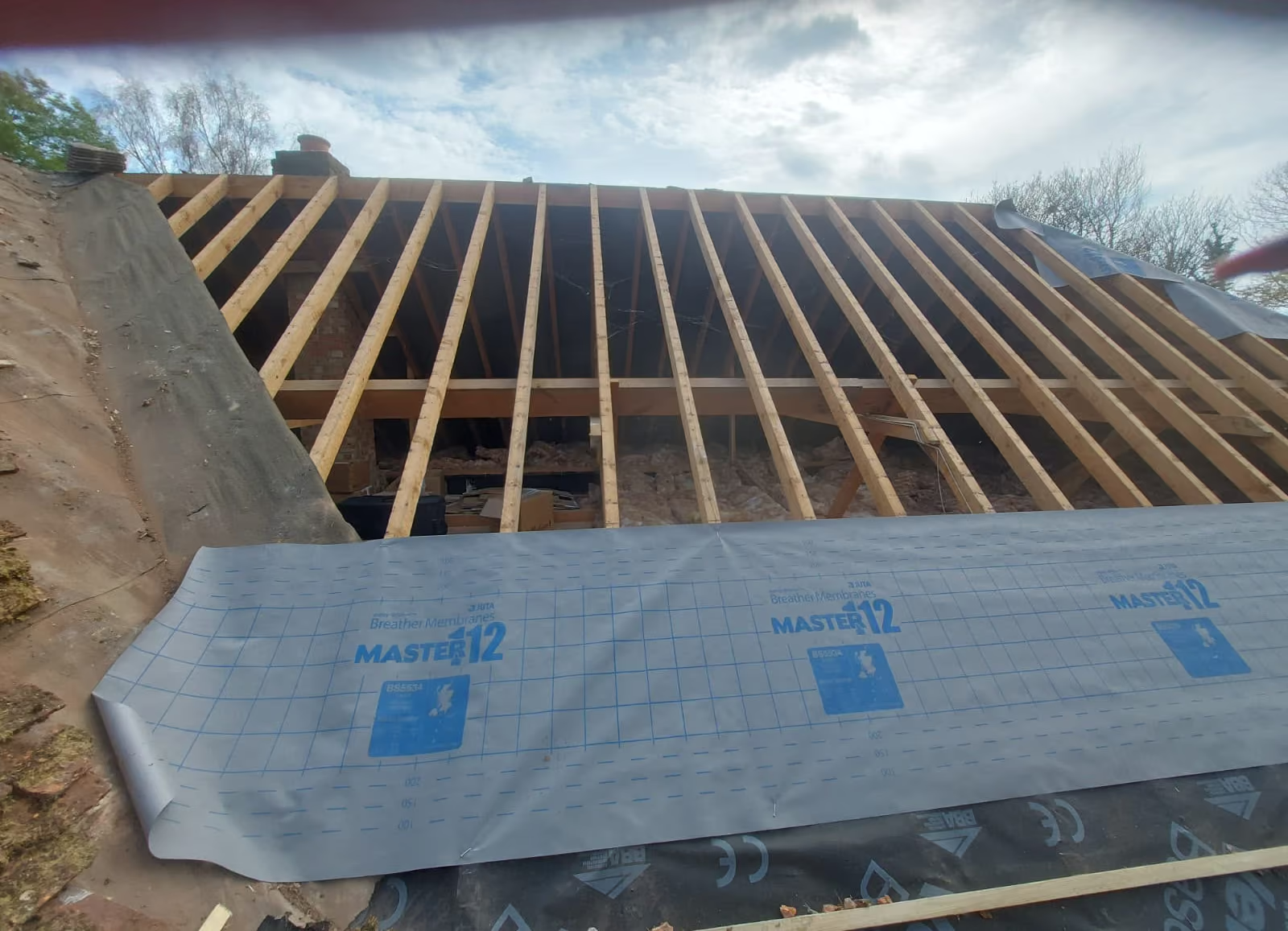
Older roofs laid with bitumen felt do not breathe at all. A dry ridge with a ventilating roll opens the top of the roof, and vented soffits open the bottom.
Get an estimate
Tell us what the roof is doing
Estimates and advice are free. Ring and describe the problem, or send a photograph of it, and you will get a straight answer about whether it needs a repair or a new roof.
All work guaranteed.
Want us to take a look at the roof?
Leave a name and a number and we will ring back to sort a time. Estimates and advice are free.