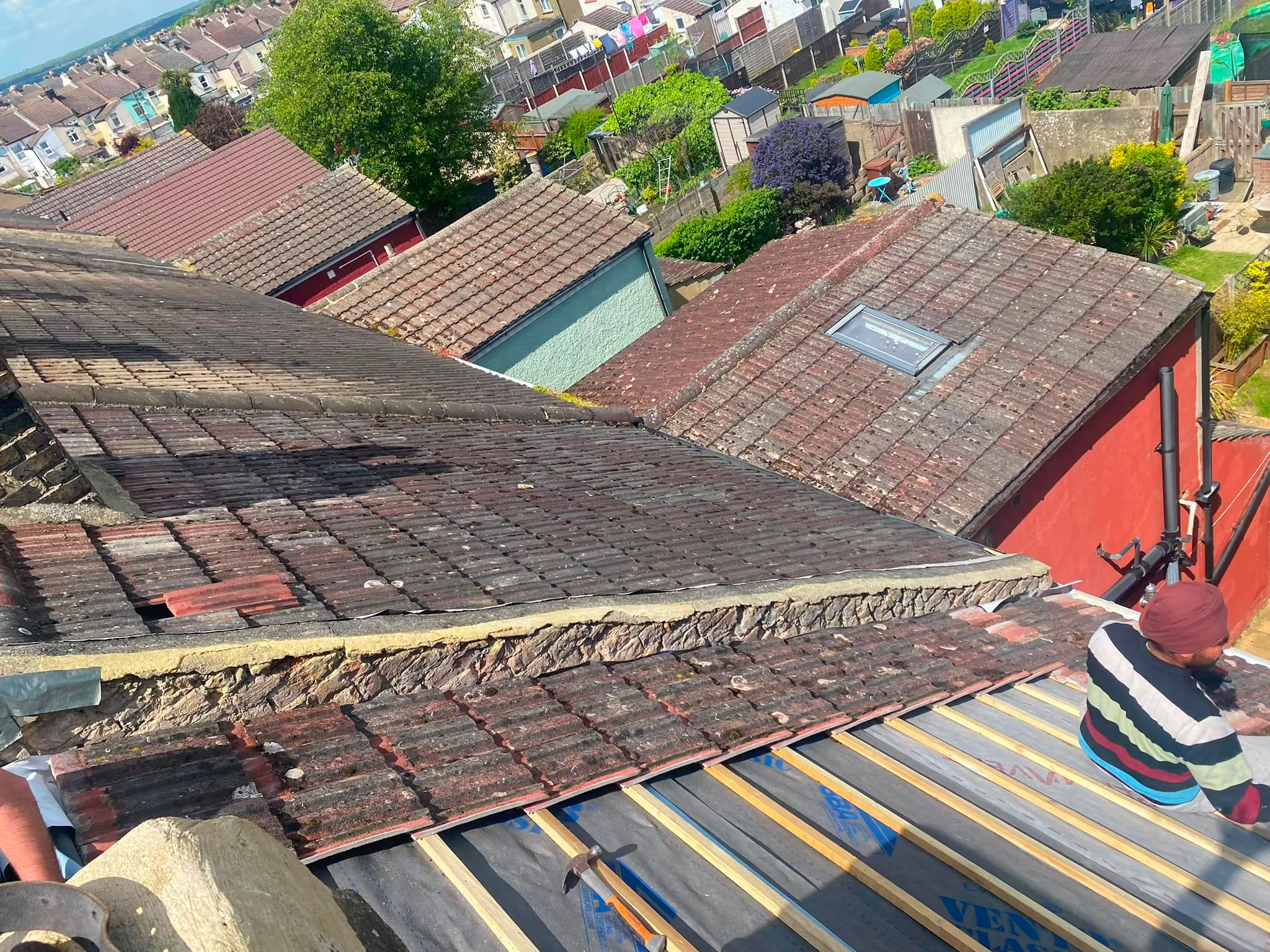
Is dry verge worth it?
For most tiled roofs, yes. Dry verge caps clip and screw over the tile ends at the gable edge, in place of the mortar bedded there. Mortar cracks and drops out over time, and once it goes the wind can get under the tiles.
Dry verge and wet verge, side by side
A wet verge is bedded in mortar. The tiles at the gable end sit on a fillet of sand and cement, usually over a thin undercloak board. It looks neat the day it goes on.
A dry verge has no mortar at all. Plastic or aluminium caps sit over the tile ends and screw down into the batten ends underneath. They hold the edge tiles and close the gap in one go.
Wet verge: mortar, cracking, repointing, and access needed every time it is done. Dry verge: mechanical fixings, no bedding, nothing to repoint.
There is no mortar to crack, so there is nothing to repoint.
What is the difference between dry verge and wet verge?
The difference is mortar. A wet verge is bedded in it. A dry verge is screwed down instead.
That one difference decides how the edge behaves for the next twenty years. Mortar is rigid and the roof under it moves, so the fillet splits and lumps fall away.
A dry verge cap moves with the roof and does not rely on anything sticking to anything. It also caps the open end of the tile, which is where wind gets a hold.
What happens if you leave the mortar
First the fillet cracks along its length. Then pieces drop into the gutter or onto the path below.
Once a gap opens, wind gets under the edge tiles and lifts them. A gable end in a gale is the part of a roof that goes first.
Water follows the same gap. It runs down the inside of the gable wall and shows up as damp in the top corner of an upstairs room.
Repointing puts new mortar back on a roof that still moves. It cracks again on the same cycle, and the access has to be paid for each time.
How much does a dry verge system cost?
We do not publish a price for it. The honest number depends on the gable in front of you.
Four things move it. The length of the verge. One gable or two. The height of the house, which decides how it is reached. Whether old mortar has to be chopped off first.
Free estimates and free advice. Ring 07477 536 273 and ask.
When dry verge is not the answer
If the roof is due to come off inside a year or two, the verge work waits and goes on with the new covering.
Caps are made to suit a tile profile, so the cap has to match the tile. There are systems for slate as well as for interlocking tile, and the wrong profile sits proud and looks wrong.
If the batten ends behind the verge have rotted, they are replaced first. Nothing screws into soft timber.
Get an estimate
Tell us what the roof is doing
Estimates and advice are free. Ring and describe the problem, or send a photograph of it, and you will get a straight answer about whether it needs a repair or a new roof.
All work guaranteed.
Want us to take a look at the roof?
Leave a name and a number and we will ring back to sort a time. Estimates and advice are free.